
The Rise of Hybrid Production: How AI and Virtual Production Are Changing Filmmaking
The film industry has always evolved alongside technology. From the transition to sound and color, to digital cinematography and visual effects, each innovation has expanded what's possible for filmmakers.
Today, the industry is experiencing another transformation through the rise of hybrid production.
Rather than relying solely on traditional filmmaking methods or fully digital workflows, many productions are combining practical filmmaking, artificial intelligence, virtual production, Unreal Engine, and LED volume technology into a single production pipeline.
This approach allows creative teams to move faster, collaborate more efficiently, and unlock new creative possibilities without sacrificing the human element of storytelling.
What Is Hybrid Production?
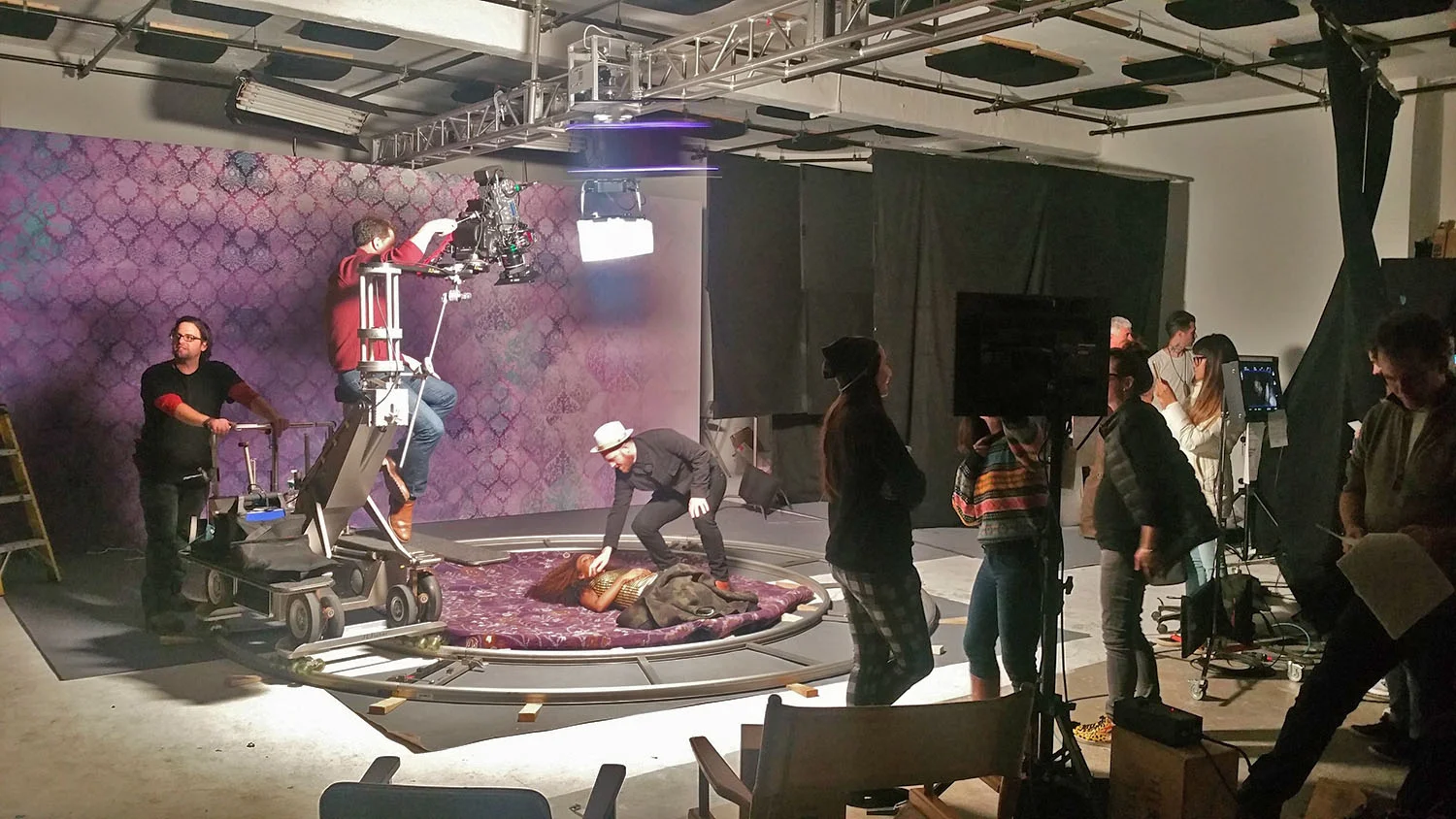
Hybrid production refers to the combination of traditional filmmaking techniques and emerging production technologies.
Instead of choosing one approach over another, productions can leverage the strengths of multiple workflows throughout the creative process.
A hybrid production may include:
Traditional cinematography
Practical sets and props
Physical locations
AI-assisted concept development
Virtual production environments
LED volume technology
Unreal Engine workflows
In-Camera VFX
Each tool serves a different purpose while contributing to the same creative vision.
How AI Is Influencing Filmmaking
Artificial intelligence is becoming an increasingly valuable tool during pre-production and creative development.
Many production teams are exploring AI for:
Storyboarding
Mood boards
Concept development
Environment ideation
Previsualization
Creative exploration
While AI is often discussed as a disruptive technology, its most practical applications are currently focused on helping creative teams work more efficiently during early stages of production.
The strongest projects continue to rely on experienced directors, cinematographers, production designers, editors, and artists who use technology to support their creative process.
Virtual Production Changes What's Possible
Virtual production has emerged as one of the most significant innovations in modern filmmaking.
Using LED volume technology, real-time rendering, camera tracking, and digital environments, filmmakers can create immersive worlds within a controlled studio environment.
Virtual production offers several advantages:
Reduced travel requirements
Greater environmental control
Faster production schedules
Real-time creative collaboration
More predictable shooting conditions
As virtual production technology becomes more accessible, it is being adopted across commercials, music videos, branded content, television productions, and feature films.
The Role of LED Volumes
LED volumes have become one of the defining technologies behind virtual production.
Unlike traditional green screen workflows, LED walls display environments directly on set, allowing actors, directors, and cinematographers to interact with the visual environment during production.
Benefits include:
Realistic reflections
Interactive lighting
Improved visualization on set
Reduced post-production requirements
Greater creative confidence during production
For many productions, LED volumes create opportunities to achieve ambitious visual results while maintaining production efficiency.
Why Unreal Engine Matters
At the center of many virtual production workflows is Unreal Engine.
Originally developed for interactive entertainment, Unreal Engine has become one of the most widely used tools for real-time filmmaking and virtual production.
Creative teams use Unreal Engine for:
Previsualization
Virtual scouting
Environment creation
Real-time rendering
In-Camera VFX
LED wall content development
Its ability to render photorealistic environments in real time allows filmmakers to make creative decisions earlier and see results instantly.
The Future of Filmmaking
The future of filmmaking may not belong to any single technology.
Instead, the industry is moving toward integrated workflows that combine the strengths of practical production, virtual production, and AI-assisted creative tools.
The productions of tomorrow may begin with AI-generated concepts, transition into Unreal Engine environments, utilize LED volume technology during filming, and ultimately blend physical and digital production techniques into a seamless final product.
This hybrid approach allows filmmakers to remain focused on storytelling while leveraging technologies that improve flexibility, efficiency, and creative control.
How Be Electric Studios Supports Hybrid Production
At Be Electric Studios, we're closely following the evolution of hybrid production workflows.
Our virtual production ecosystem supports modern content creation through:
LED Volume Technology
Unreal Engine Workflows
Camera Tracking Systems
Motion Control Integration
In-Camera VFX
Real-Time Rendering
Whether you're producing a commercial campaign, branded content, music video, television project, or feature film, hybrid production technologies can help expand creative possibilities while streamlining production.
Explore More
Looking Ahead
The conversation is no longer about choosing between traditional filmmaking, virtual production, or AI.
The future belongs to productions that successfully combine all three.
As technology continues to evolve, hybrid production is creating new opportunities for filmmakers, brands, agencies, and studios to tell stories in ways that were once impossible.
And we're only getting started.

